Vibration isolation technical guide
What is source isolation?
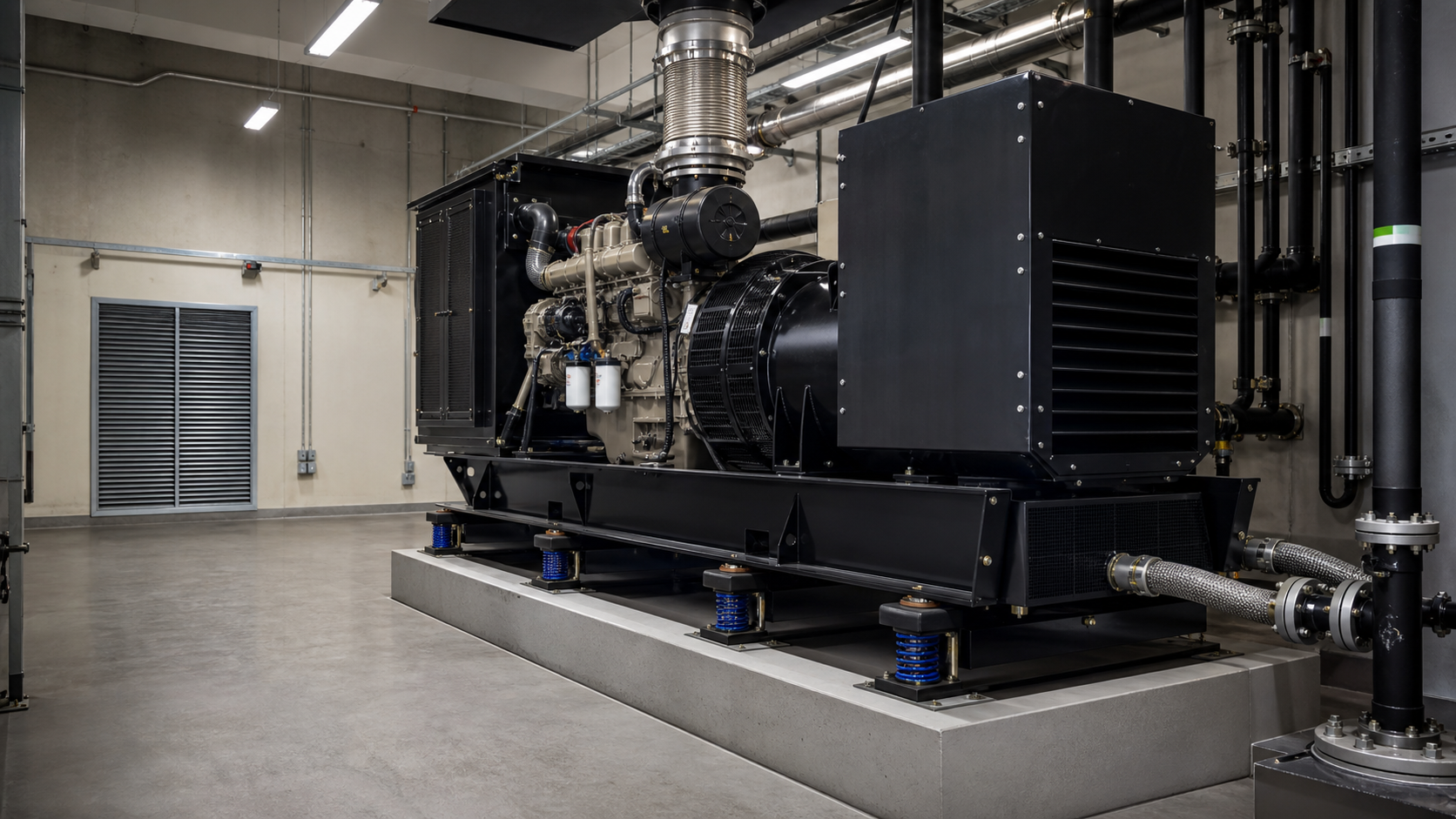
Source isolation separates vibrating machinery from the supporting structure through controlled resilience. Its purpose is to create a safe relationship between operating frequency and system natural frequency while maintaining alignment and stability.
Why control vibration at the source?
Generators, pumps, compressors, fans and production machinery generate periodic or variable mechanical forces. When the equipment is rigidly connected to the slab, this energy can travel through columns, beams, walls, pipes and ducts. Treating the receiving room after the energy has entered the structure is less direct and often less effective.
What data controls isolator selection?
Selection cannot be based on total machine weight alone. Actual load at each support, operating and start-up speeds, force direction, center of gravity, base stiffness and slab capacity all matter. Two machines of equal weight may require different isolators because their excitation frequencies differ.
- Static load: Real vertical load and expected deflection at each mount.
- Excitation frequency: Motor speed, blade-pass frequency or repeated impact.
- Natural frequency: The dynamic behavior of the machine, base and isolator system.
- Service connections: Pipes, ducts, exhausts and cables that may bypass the isolators.
Elastomer or spring?
Rubber and elastomeric mounts are compact, durable and inherently damped. They are commonly suited to medium- and high-speed equipment where limited deflection is required. Springs can provide a lower natural frequency and suit low-speed or high-isolation applications, but lateral stability, corrosion, seismic restraint and movement must also be resolved.
Why flexible connections matter
A rigid pipe beside correctly selected mounts can short-circuit the entire isolation system. Flexible pipe connectors, duct connections, exhaust bellows and cable allowances must accommodate movement without being preloaded or misaligned.
Installation and verification
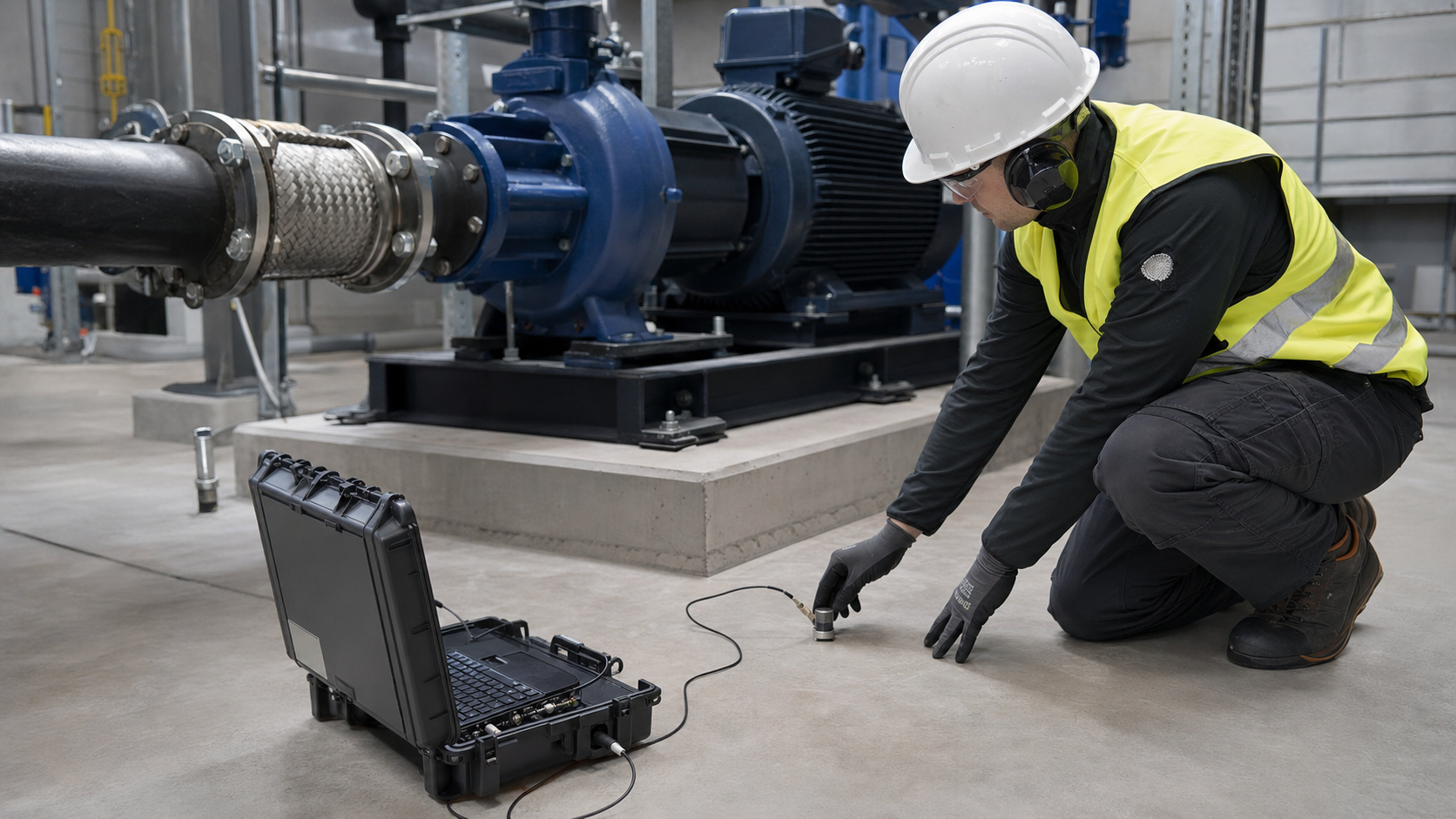
Baseline conditions are recorded before installation and repeated under a comparable operating state after completion. Mount deflection, base clearance, flexible connections and accidental rigid contacts are inspected. Results are reviewed by frequency band rather than relying only on a single overall value.