Vibration isolation technical guide
What are impact and structure-borne noise?
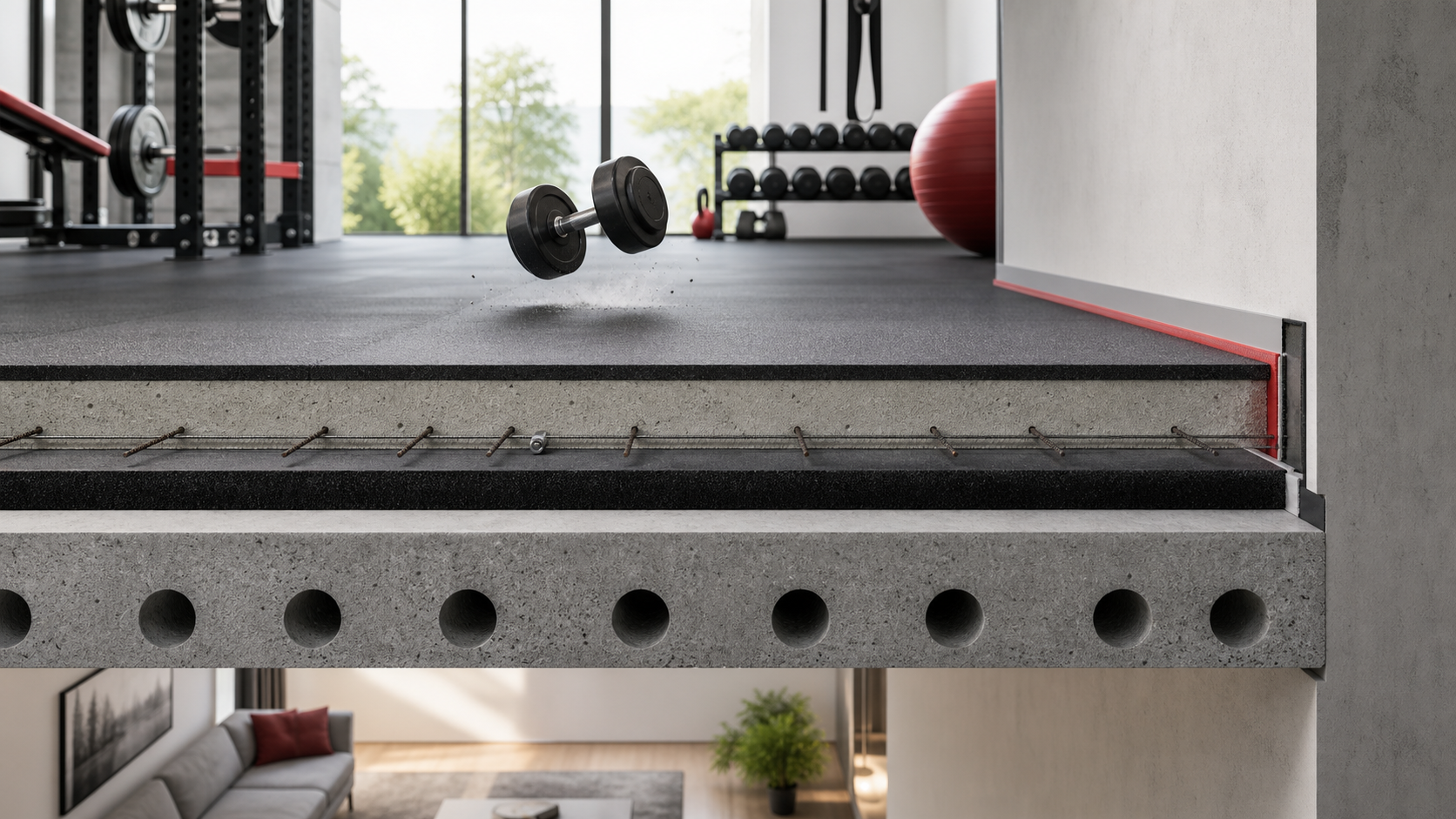
Impact noise begins when force is applied directly to a surface. Footfall, dropped weights, moving furniture and treadmills excite the floor structure, allowing vibration to travel through slabs and junctions into remote spaces.
How does impact noise differ from airborne noise?
Speech and music first travel through air before exciting a wall or floor. Impact applies force directly to the structure. This is why adding absorptive treatment to the receiving room rarely addresses the main path. The most direct intervention is usually at the source floor.
How does a floating floor work?
A floating screed, dry floor or heavy platform is supported on a continuous resilient layer without rigid contact to the structural slab or perimeter walls. The upper mass distributes impact while the resilient layer limits force transmission. Performance depends on dynamic stiffness, load compression, long-term creep, upper-layer mass and junction continuity, not simply underlay thickness.
Why is perimeter isolation critical?
If the floating layer touches a wall, column, threshold or service pipe, impact energy can bypass the underlay. Perimeter strips isolate every vertical junction and must remain intact until the final floor finish is complete.
- Seal underlay joints to prevent screed leakage.
- Carry perimeter strips above final floor level before trimming.
- Use resilient sleeves at service penetrations.
- Detail thresholds and skirtings without rigid bridges.
Applications require different systems
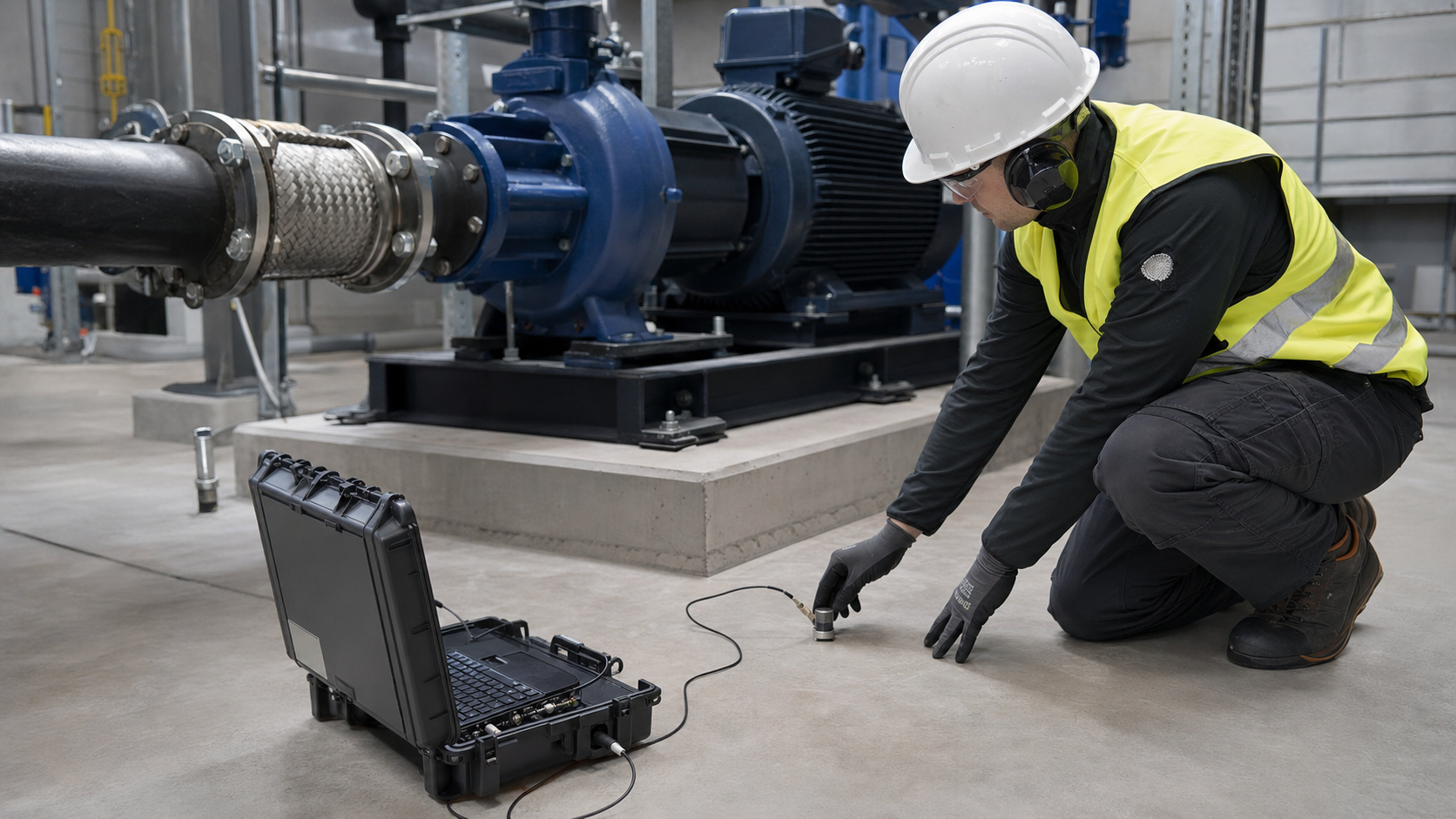
Residential footfall may be addressed with thin screed or floor-finish underlays. Gyms and free-weight areas produce higher, lower-frequency impacts and may require thick elastomer layers, distribution plates or isolated platforms. Studios combine floating floors with isolated walls and ceilings. Mechanical equipment bases are a separate source-isolation problem and should not be confused with isolating the entire room floor.
Can treatment from below work?
Where the source floor is inaccessible, a resiliently suspended ceiling can reduce noise in the room below. However, once impact energy enters the slab it can also travel through walls and columns, so a ceiling-only treatment may not match source-side floating-floor performance.
Verification
Standard tapping-machine tests can assess building floor performance, while gyms and industrial impacts may require measurements under the real operating scenario. Underlay continuity, perimeter strips, service penetrations and rigid contacts should be documented before concealed layers are closed.